
Belém, Brazil, 19 November 2025 – Leaders from governments, development banks and climate finance and policy organizations gathered this week at the Italian Pavilion at COP30 to highlight the progress and innovation emerging through the G7 Adaptation Accelerator Hub (AAH), an initiative led by the Government of Italy in collaboration with UNDP. The high-level event, “From Plans to Investments: Demonstrating Progress and Innovation through the Adaptation Accelerator Hub,” showcased the Hub’s role in advancing the global shift from climate adaptation planning to investment-ready implementation and the Italy–UNDP partnership, which leverages Italy’s policy leadership and UNDP’s presence in 170 countries to support adaptation action where needs are highest.
Launched under Italy’s G7 Presidency in 2024 and supported by UNDP, the AAH has rapidly evolved from concept to delivery. Since its official announcement at COP29 in Baku, the Hub has consolidated its operational architecture, expanded country partnerships, and initiated the development of Adaptation Investment Plans (AIPs) – nationally owned frameworks that translate NAP and NDC priorities into investment pipelines aligned with national budgets.
Concrete progress and country partnerships
Although adaptation finance flows are increasing, from US$35 billion in 2018 to $76 billion in 2022, a major gap remains. The 2025 Adaptation Gap Report indicates that by 2035, developing countries will need up to 12 times more than current levels of international public flows, with costs reaching $310-365 billion annually.
The Hub positions adaptation not only as a technical issue, but as a political and economic priority, providing a practical mechanism to operationalize the UAE-Belém Work Programme on the Global Goal on Adaptation. Through investment preparation and targeted partnerships, the Hub aims to strengthen resilience, drive inclusive growth and promote locally led adaptation.
Since launching, the Hub is supporting multiple partner countries, including Ethiopia, and exploring collaboration with Senegal, Maldives, Mozambique, Mauritius and Cambodia. Ethiopia is advancing the first Adaptation Investment Strategy under the Hub, being developed within the context of the Italy-Ethiopia Memorandum of Understanding. The strategy is expected to be validated in the early part of 2026 and demonstrates how Italy’s bilateral cooperation, supported by UNDP’s technical expertise, can generate models with potential for broader replication.
The Hub has also advanced work on private sector mobilization, developing an engagement framework to connect governments, development finance institutions, philanthropies and private investors through blended-finance approaches and de-risking instruments to boost investment in adaptation.
An important part of this is leveraging the Platform for Investment Support and Technical Assistance (PISTA), funded by Italy, through which the Hub is strengthening country pipelines of bankable adaptation projects and offering tailored blended-finance and de-risking support, including ad-hoc TA for proposals, feasibility work and investor engagement.
Speakers underscore the AAH as a model for turning plans into investment
Speaking at the event, high-level representatives emphasized the Hub’s critical role in accelerating implementation and closing the adaptation finance gap.
Italy’s Minister of the Environment and Energy Security, Gilberto Pichetto Fratin, stressed that adaptation delivers not only resilience but also economic opportunity. He called for continued dialogue at COP30 to align mitigation, decarbonization, and adaptation into coherent development pathways.
Alice Amorim, COP30 Presidency’s Director of Programmes, highlighted the need for effective cooperation mechanisms to achieve the Global Goal on Adaptation. She emphasized country-led processes, stronger on-the-ground capacity, and enabling conditions to grow an emerging adaptation economy.
Daniele Violetti, Senior Director for Programmes Coordination at UNFCCC, underscored that investing in adaptation saves lives and creates development opportunities. He commended Italy and the G7 for advancing practical solutions and noted the growing importance of private-sector involvement.
Expressing strong support for the Hub’s rapid progress, Lyes Ferroukhi, Regional Hub Manager for UNDP in Latin America and the Caribbean, pointed to the value of coordination among governments, development finance institutions and knowledge networks.
Ali Shareef, Special Envoy for Climate Change of the Maldives, stressed the urgency of adaptation needs in Small Island Developing States and the Hub’s potential to leverage donor finance and attract private capital. He welcomed Italy’s bilateral collaboration and focus on locally driven solutions. Representatives from Ethiopia and Senegal echoed these points, calling for cross-sectoral approaches, capacity building, and technology sharing.
Looking ahead
The event also focused on collaboration opportunities, including matchmaking between countries and financiers, and alignment with the upcoming French G7 Presidency. The Hub is preparing its first investment matchmaking activities, alongside knowledge exchange platforms such as NAP Expo and partnerships with the NAP Global Network and NDC Partnership.
With adaptation needs mounting and climate impacts escalating, the Adaptation Accelerator Hub is emerging as a model for converting ambition into action, helping countries move from planning to investment readiness and ultimately to implementation.
Reflecting growing momentum, UNDP is now a founding partner in the NAP Implementation Alliance established by the Brazilian COP Presidency – helping scale the approach through the Climate Promise Forward and the Hub, bringing the broader UN System to the table. Looking ahead, Italy and UNDP will continue working together to expand the Hub’s reach and connect adaptation priorities with financing opportunities.
*
Photos from the event
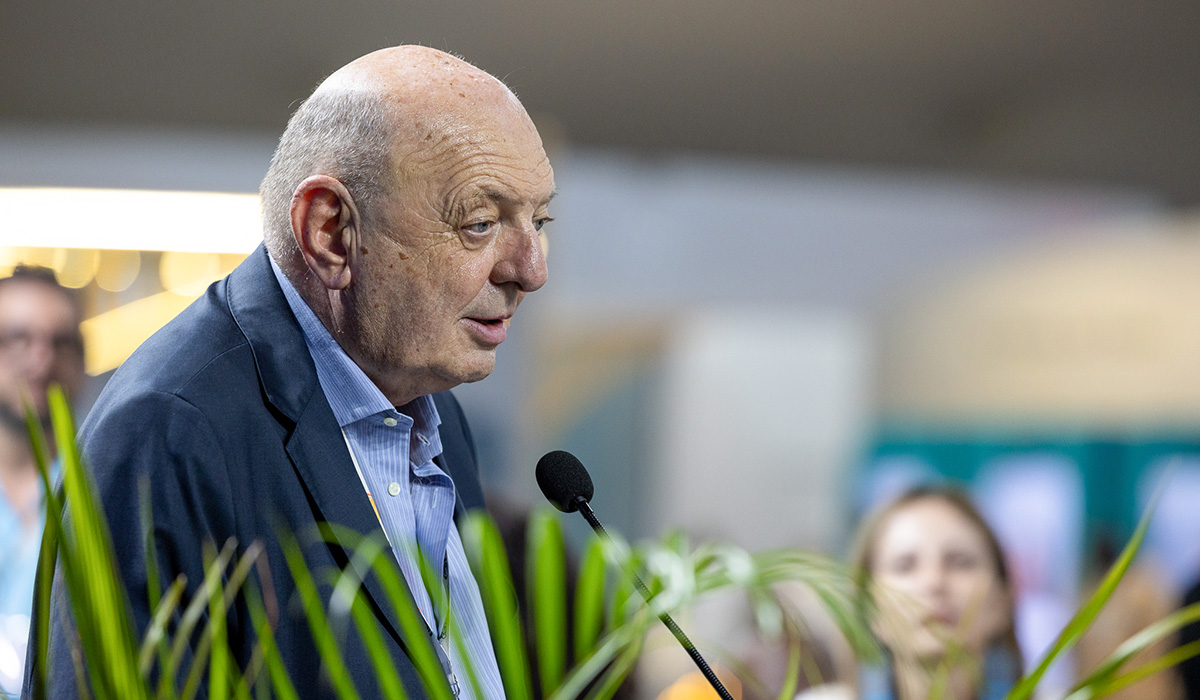
Italy’s Minister of the Environment and Energy Security, Gilberto Pichetto Fratin, stressed that adaptation delivers not only resilience but also economic opportunity.
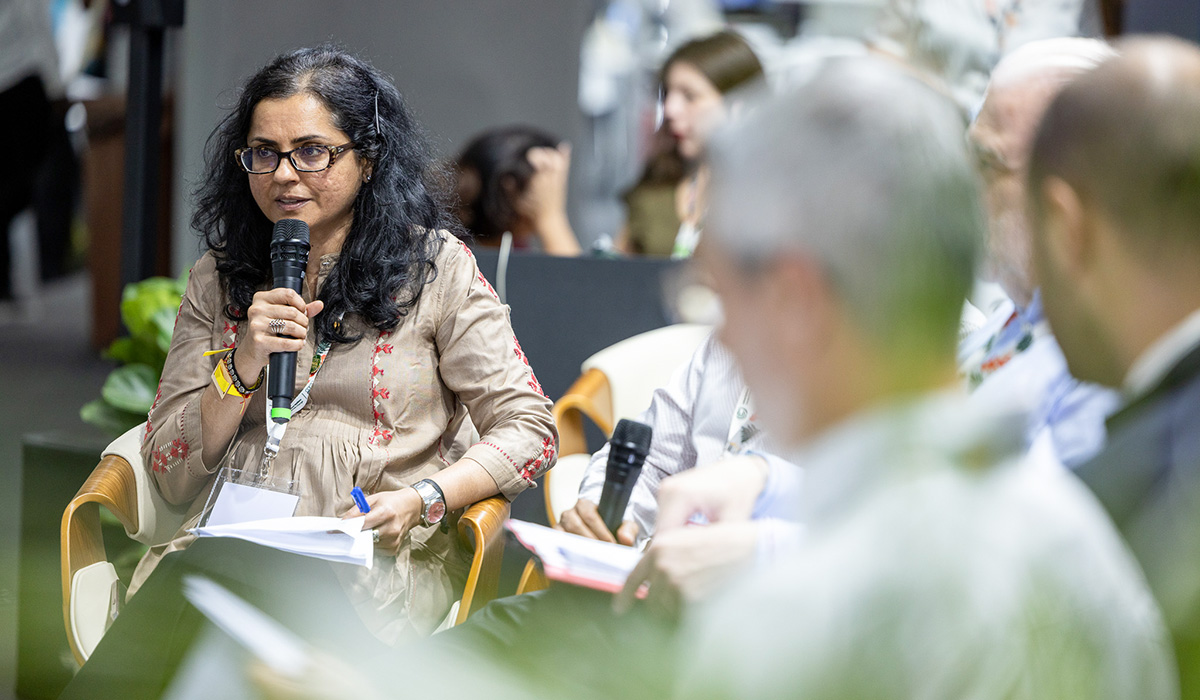
Opening the event, Rohini Kohli, Head of Adaptation - Policy at UNDP, emphasized the Hub’s role as a practical delivery mechanism that links national planning, enabling environments, and investment readiness—directly supporting the implementation phase of the Global Goal on Adaptation (GGA).
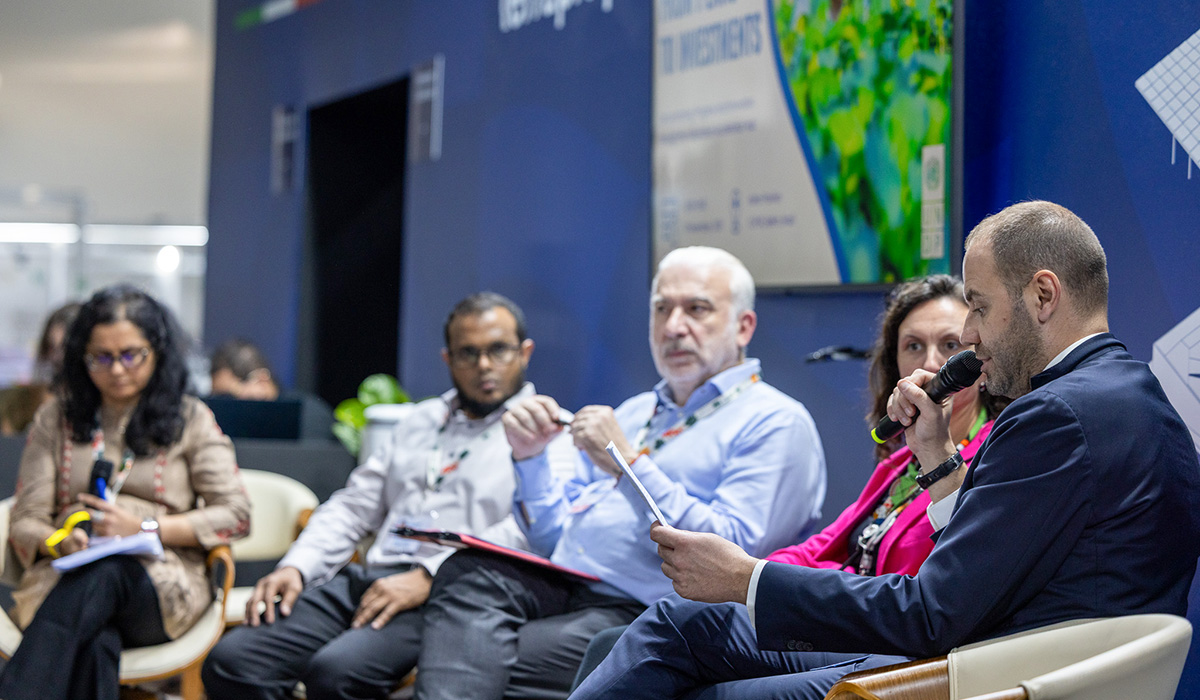
L to R: Rohini Kohli, Head of Adaptation – Policy at UNDP; Ali Shareef, Special Envoy for Climate Change of the Maldives; Daniele Violetti, Senior Director for Programmes Coordination at UNFCCC; Alice Amorim, COP30 Presidency’s Director of Programmes; Alessandro Guerri, Director-General, European and International Affairs and International Finance, Italian Ministry for the Environment and Energy Security, Italy.
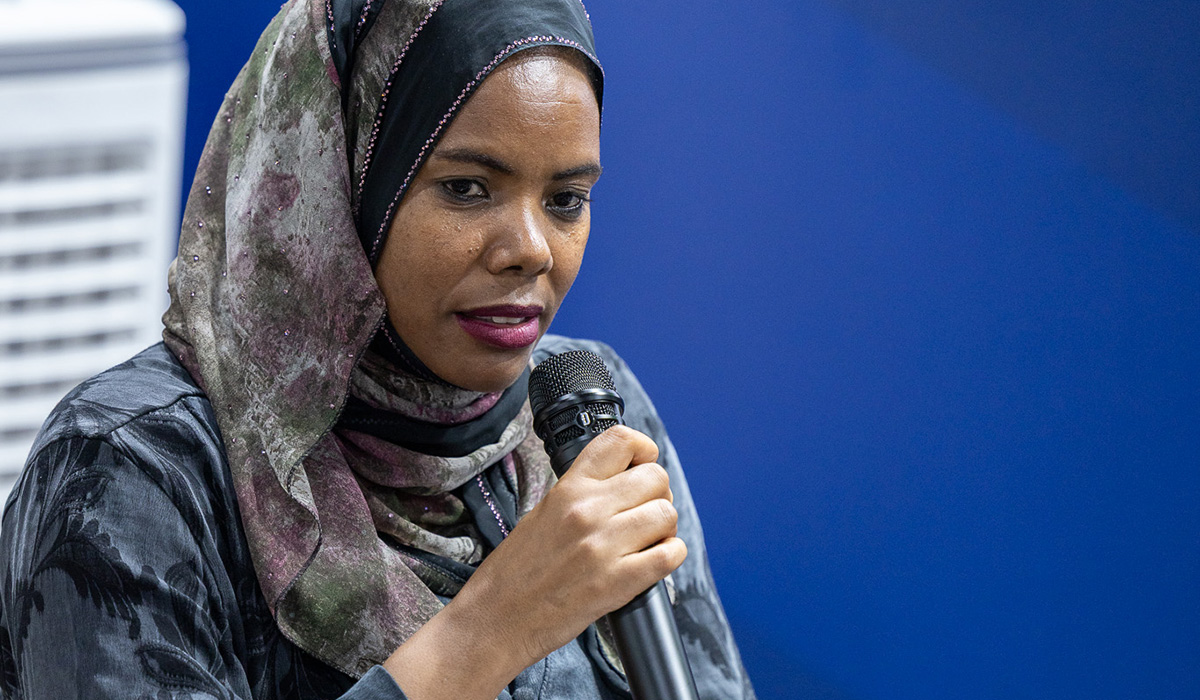
Rehima Mohammed, Senior Expert on Environment and Climate Change Agreements and Partnerships, Ministry of Planning and Development, Ethiopia.

Other speakers at the event included Masako Ogawa, Japan; Anne Hammill, Associate Vice-President, Resilience, IISD, NAP Global Network; Arghya Sinha Roy, Director, Climate Change from the, Asian Development Bank (ADB); and Atika Ben Maïd, Deputy Head of the Climate and Nature Team, Agence Française de Développement (ADF), France. Discussion focused on mobilizing finance, strengthening country pipelines, and leveraging partnerships to close the adaptation investment gap.
*
About the Adaptation Accelerator Hub
Led by the Government of Italy in alignment with the development objectives of the Mattei Plan for Africa, with UNDP as the partner agency, the Adaptation Accelerator Hub (AAH) supports developing countries – particularly those most vulnerable to climate change – to accelerate climate adaptation, helping translate national priorities into bankable, finance-ready initiatives that can drive systemic, long-term resilience. Learn more.