
Photo:
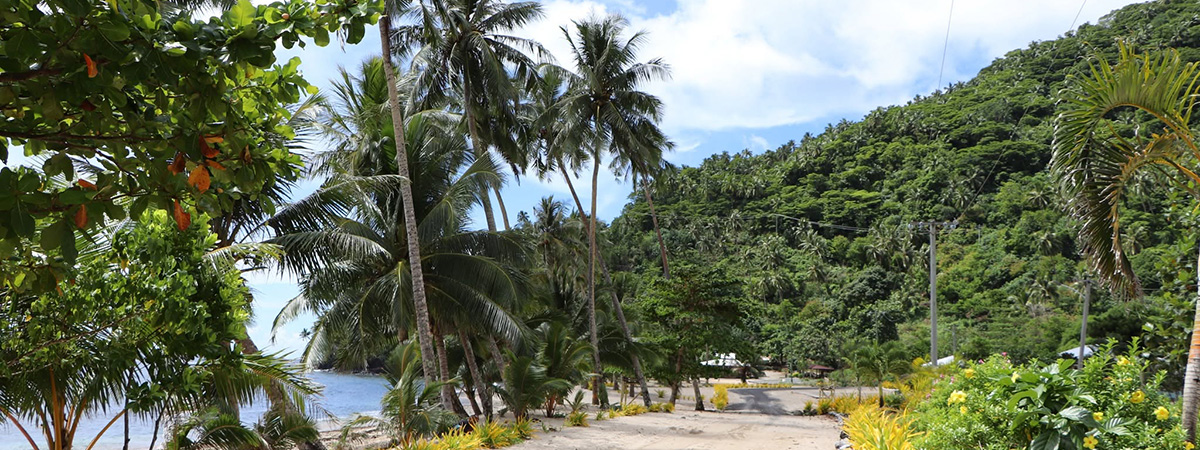
Samoa is highly vulnerable to climate hazards, which are already driving coastal erosion, flooding, infrastructure and livelihood losses, and saltwater intrusion into freshwater resources. These shocks intensify pressures on Samoa’s key ecosystems, which serve as natural defenses against wave energy, storm surges and flooding.
However, these ecosystems are increasingly degraded by deforestation, over-extraction of natural resources, invasive species, land-use change and climate impacts, leading to habitat loss, reduced biodiversity, declining land productivity and weakened resilience. The result is growing risks to communities, food security and economic stability.
With funding from the GEF Trust Fund and the GEF-managed Special Climate Change Fund (SCCF), this project will strengthen the climate resilience of Samoa’s ecosystems and communities by integrating ecosystem-based adaptation (EbA) into watershed management, while delivering co-benefits for biodiversity conservation and land degradation neutrality.
Implemented across nine districts on the islands of Savai’i and Upolu, the project will build national EbA capacity, restore degraded terrestrial and coastal ecosystems, establish community-led conservation areas, promote sustainable agroforestry, support community Blue Carbon initiatives, construct hybrid EbA seawalls, and directly benefit at least 10,000 people.
- Community
- District
- National
- Local Governments
- National Governments
- Non-Governmental Organizations
- Private Sector Partners
- United Nations Development Programme (UNDP)
This project will directly benefit at least 10,000 people (50 percent women) across nine climate-vulnerable districts in Samoa. Primary beneficiaries include rural and coastal communities that depend on agriculture, fisheries and tourism for their livelihoods, particularly women, smallholder farmers and fishing households whose well-being and economic security are closely linked to the health of Samoa's ecosystems.
- United Nations Development Programme (UNDP)
- Ministry of Natural Resources and Environment (MNRE), Government of Samoa
Expected outcomes
Outcome 1. Strengthened national climate adaptation, biodiversity conservation and sustainable land management capacity through the integrated and gender-inclusive ecosystem-based adaptation (EbA) approach
Outcome 2. Scaled up gender-inclusive ecosystem-based adaptation measures in the project area
Outcome 3. Project EbA best practices and gender-inclusive models are replicated by Samoa’s districts, projects, and stakeholders
Outcome 4. Effective project adaptive management based on gender-sensitive monitoring and evaluation (M&E)
- Image
- Image
- Image
- Image
- Image
- Image
- Image
- Image
Samoa’s ecosystems, economy and communities are highly vulnerable to climate change impacts, including increased intensity and frequency of extreme weather events, sea-level rise and shifts in rainfall patterns. These impacts are compounded by human-induced pressures such as deforestation, over-exploitation of natural resources and invasive species, which are degrading forests, coral reefs, mangroves, seagrass meadows and other ecosystems that provide critical adaptation services. As these natural systems lose their ability to buffer communities from climate hazards, vulnerability to flooding, coastal erosion, drought, saltwater intrusion and biodiversity loss continues to grow.
This project addresses a set of key barriers that limit the uptake of ecosystem-based adaptation (EbA) in Samoa. These include insufficient capacity to plan and implement EbA at scale; limited investment in the protection and restoration of ecosystems with high adaptation value; inadequate systems for capturing, sharing and scaling lessons and good practices; and gaps in monitoring and evaluation needed to demonstrate impacts and support long-term sustainability.
The project’s theory of change is that if Samoa strengthens national capacity and enabling conditions for EbA; protects and restores ecosystems that reduce climate risks while delivering biodiversity and land degradation benefits; and generates the knowledge, evidence and learning needed to scale successful approaches, then the resilience of ecosystems and communities to climate change will be enhanced.
By integrating EbA into watershed management and implementing nature-based solutions from ridge to reef, the project will help break the cycle of vulnerability created by the interaction of climate change and ecosystem degradation, while delivering lasting benefits for livelihoods, biodiversity conservation and sustainable development.
Component 1: Enhancing national climate adaptation, biodiversity conservation, and sustainable land management capacity via the integrated and gender inclusive Ecosystem-based Adaptation (EbA)
Outcome 1. Strengthened national climate adaptation, biodiversity conservation, and sustainable land management capacity through the integrated and gender inclusive Ecosystem-based Adaptation (EbA) approach through delivery of three project Outputs:
Output 1.1. Multi-sectoral institutional framework led by MNRE established for the coordination of Ecosystem-based Adaptation and associated conservation initiatives (barrier, source and filter ecosystem restoration and protection) under the Community Integrated Management Plans (CIMPs)
Output 1.2. EbA & Biodiversity Funding Window of Samoa’s Loss & Damage Fund established and operationalized to catalyze financial and technical resources to restore, protect, and enhance the county’s ecosystems and biodiversity for climate adaptation
Output 1.3. Nurseries used for Ecosystem-based Adaptation (nurseries and training centers) are upgraded to support implementation of CIMPs in ecosystem restoration and mixed adaptation solutions.
Component 2: Implementing gender-inclusive Ecosystem-Based Adaptation measures to improve climate resilience of ecosystems and communities, protect biodiversity, and combat land degradation
Outcome 2. Scaled up gender inclusive Ecosystem-based Adaptation measures in the project area
Output 2.1. Ecosystem-based Adaptation initiatives are implemented on the ground to support CIMP climate resilience priorities, including shoreline and springs protection, mangrove, riparian and coral reef restoration, reforestation of slopes, and agroforestry system
Output 2.2. Community-led Conservation Areas are established to protect the key coastal ecosystems (forest, mangroves, wetlands, coral reefs, and seagrass meadows) having adaptation and biodiversity conservation values
Output 2.3. Public-Private Partnerships and Blue Economy projects focused on Ecosystem-based Adaptation are developed and implemented.
Component 3: Gender mainstreaming, knowledge management and learning for dissemination of EbA best practices for climate adaptation, biodiversity conservation and sustainable land management
Outcome 3. Project EbA best practices and gender-inclusive models are replicated by Samoa’s districts, projects, and stakeholders
Output 3.1. Comprehensive Gender Mainstreaming Strategy is developed and coordinated to incorporate gender equality into EbA initiatives
Output 3.2. Communication and awareness strategy on EbA for climate adaptation and biodiversity conservation developed and implemented
Output 3.3. Gender-inclusive best practices and lessons learned on EbA are made available for use by Samoa’s districts, and shared regionally and internationally for replication.
Component 4: Gender Sensitive Monitoring and Evaluation (M&E)
Outcome 4. Effective project adaptive management based on gender sensitive M&E
Output 4.1. Participatory and gender sensitive M&E system is implemented to measure the project effectiveness and tests the project theory of change
Azza Aishath, Regional Technical Advisor, Climate Change Adaptation, UNDP aishath.azza@undp.org