Photo:
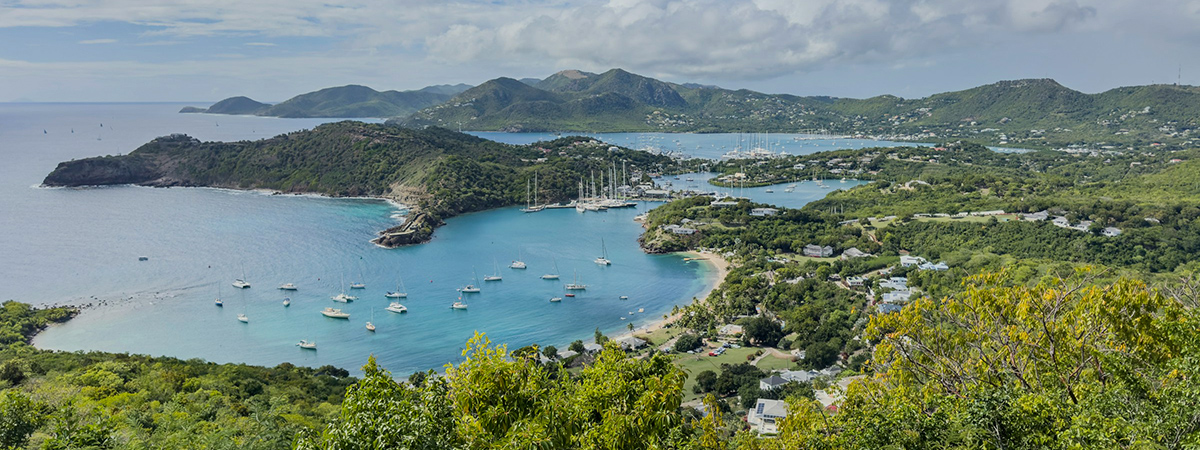
Antigua and Barbuda is highly vulnerable to climate-related hazards, including hurricanes, extreme rainfall, droughts and sea-level rise. As a Small Island Developing State (SIDS), the country faces increasing climate risks, with projections suggesting a rise in the frequency and intensity of high-category hurricanes, accompanied by stronger winds and heavier precipitation. These hazards place growing demands on the Antigua and Barbuda Meteorological Service (ABMS), which plays a critical role in weather forecasting, climate services and early warning systems.
Despite its importance, ABMS operates with limited national funding and faces significant challenges related to ageing observation infrastructure, insufficient maintenance capacity, weak data management systems and limited long-term financing. The country’s only Global Basic Observing Network (GBON) surface observation station at V.C. Bird International Airport requires refurbishment to ensure safe, sustainable and high-quality observations. Additional investments are needed in ICT infrastructure, climate data management and institutional capacity.
This three-year project aims to strengthen national meteorological observation systems and enable compliance with the GBON. Funded through the Systematic Observations Financing Facility (SOFF), the project will support infrastructure upgrades, enhanced data management, staff training, institutional strengthening and long-term financial sustainability strategies for ABMS. The project is designed to complement investments under the GCF-funded Early Warnings for All (EW4All) programme.
Implementation will be led by the United Nations Development Programme (UNDP) in partnership with ABMS, with technical support from the World Meteorological Organization (WMO) and the Met Office (United Kingdom), which will serve as the SOFF Peer Advisor.
- National
- Regional
- Global
The primary institutional beneficiary is the Antigua and Barbuda Meteorological Service (ABMS).
- United Nations Development Programme (UNDP)
- World Meteorological Organization (WMO)
Expected outcomes
Outcome 1: GBON institutional and human capacity developed
Outcome 2: GBON infrastructure in place
Outcome 3: Sustained compliance with GBON
- Image

- Image
- Image
- Image
This project was developed following Antigua and Barbuda’s GBON National Contribution Plan, which identified significant gaps in meteorological infrastructure, data management, institutional capacity and long-term financing needed to achieve and sustain GBON compliance. The assessment found that the country’s sole GBON surface station requires substantial refurbishment, while data management systems, ICT infrastructure and operational processes require modernization to ensure the availability, quality and sustainability of observations.
A key barrier identified is the limited institutional and financial capacity of ABMS. The service relies largely on government allocations and external projects, lacks sustainable revenue streams, and faces constraints in staffing, calibration, maintenance and long-term strategic planning. The project therefore combines infrastructure investments with institutional strengthening and human capacity development.
The theory of change underpinning the project is that targeted investments in meteorological infrastructure, data systems, operational procedures, staff skills and financial sustainability mechanisms will allow ABMS to achieve GBON compliance and sustain those gains over time. By improving observation quality, data management and institutional performance, the project will strengthen climate information services and support national adaptation, resilience and early warning efforts. The project is further designed to leverage and complement investments under EW4All and other ongoing regional and national climate initiatives.
Outcome 1: GBON institutional and human capacity developed
Output 1.1: National consultations conducted
Output 1.2: National Meteorological and Hydrological Service (NMHS) institutional capacity developed
Output 1.3: National Meteorological and Hydrological Service (NMHS) human capacity developed
Outcome 2: GBON infrastructure in place
Output 2.2: Improved land-based stations in place
Outcome 3: Sustained compliance with GBON
Output 3.1: GBON land-based stations commissioning period completed
Benjamin Larroquette, Global Advisor Early Warning Systems and Regional Technical Specialist, UNDP benjamin.larroquette@undp.org
Elizabeth Soomer, Project Manager, UNDP, elizabeth.charles-soomer@undp.org