Photo:
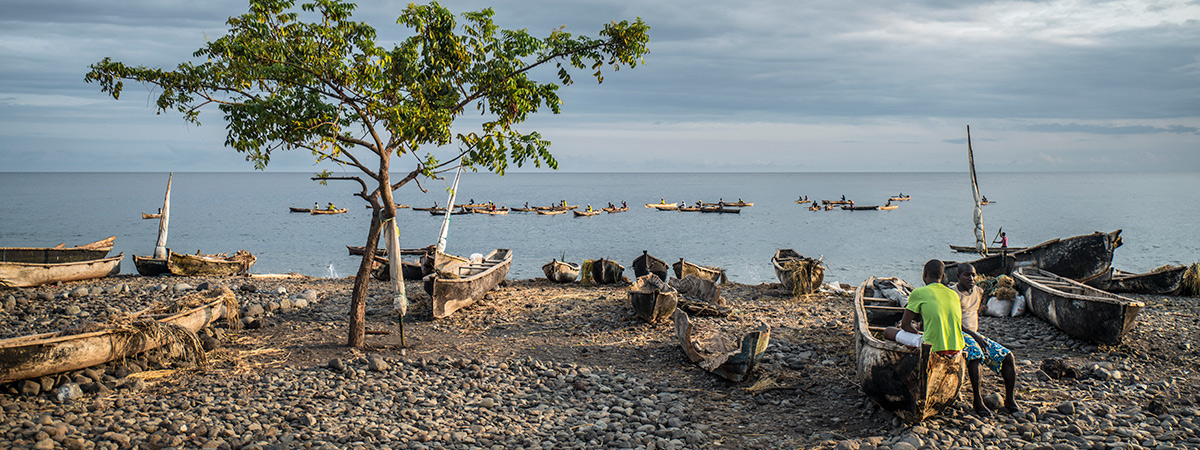
São Tomé and Príncipe, a Small Island Developing State (SIDS) in the Gulf of Guinea, is highly vulnerable to climate variability and extreme weather events, including intense tropical storms, strong winds and heavy rainfall. These hazards pose significant risks to coastal zones, communities, livelihoods and the sustainable management of terrestrial and marine resources. Although the country contributes negligibly to global greenhouse gas emissions, it bears a disproportionate share of climate impacts and faces increasing challenges associated with climate change.
The country's hydrometeorological sector faces substantial institutional and capacity constraints. The National Institute of Meteorology (INM) has limited technical, managerial and fiduciary capacities and struggles to meet the requirements of the Global Basic Observing Network (GBON). Existing weather observation infrastructure is outdated, staffing levels are insufficient, and the country lacks the resources required for robust meteorological monitoring and international data sharing.
Building on the SOFF Readiness Phase, this five-year Investment Phase project aims to strengthen the institutional, human and technical capacities of the National Institute of Meteorology (INM) to achieve and sustain GBON compliance. Funded through the Systematic Observations Financing Facility (SOFF), the project is implemented by UNDP in partnership with the National Institute of Meteorology (INM), with technical support from the World Meteorological Organization (WMO) and peer advisory support from the Royal Netherlands Meteorological Institute (KNMI). The project will upgrade two automatic weather stations, install a new upper-air observation station, strengthen weather and climate data sharing through WIS2.0 systems, and reinforce the long-term sustainability of meteorological services through institutional strengthening, capacity development and integration into national public finance systems.
- National
- Regional
- Global
- United Nations Development Programme (UNDP)
- World Meteorological Organization (WMO)
- Government of Sao Tome and Principe
Expected outcomes
Outcome 1: GBON institutional and human capacity developed
Outcome 2: GBON infrastructure in place
Outcome 3: Sustained compliance with GBON
- Image
- Image
- Image
- Image
This project was developed following completion of the SOFF Readiness Phase, which produced a National Gap Analysis, Country Hydromet Diagnostic and National Contribution Plan for São Tomé and Príncipe. These assessments identified significant institutional, human resource and infrastructure weaknesses within the National Institute of Meteorology, with low maturity scores across all assessed hydrometeorological functions and limited capacity to meet GBON requirements.
The project’s theory of change is that sustained investment in meteorological infrastructure, institutional reform and human capacity will enable the country to achieve and maintain GBON compliance while improving national and regional weather and climate services. By upgrading two existing automatic weather stations, establishing a new upper-air sounding station, improving WIS2.0 data communication systems, recruiting specialized personnel and strengthening institutional governance arrangements, the project will address critical barriers affecting observation, analysis and sharing of meteorological data.
The project also addresses structural barriers related to financial sustainability and staffing by supporting implementation of the INM legal framework, strengthening integration into public finance systems and establishing a project management unit to support implementation. Building on previous investments by UNDP, WACA and other partners, the project seeks to create a sustainable pathway for long-term meteorological service delivery, enhanced regional cooperation and improved access to climate information for decision-making.
Outcome 1: GBON institutional and human capacity developed
Output 1.1: National consultations conducted
Output 1.2: NMHS institutional capacity developed
Output 1.3: NMHS human capacity developed
Outcome 2: GBON infrastructure in place
Output 2.2: Improved land-based stations in place
Output 2.3: New upper-air station in place
Outcome 3: Sustained compliance with GBON
Output 3.1 GBON land-based stations commissioning period completed.
Output 3.2 GBON upper air stations’ commissioning period completed.
Benjamin Larroquette, Global Advisor Early Warning Systems and Regional Technical Specialist, UNDP benjamin.larroquette@undp.org