
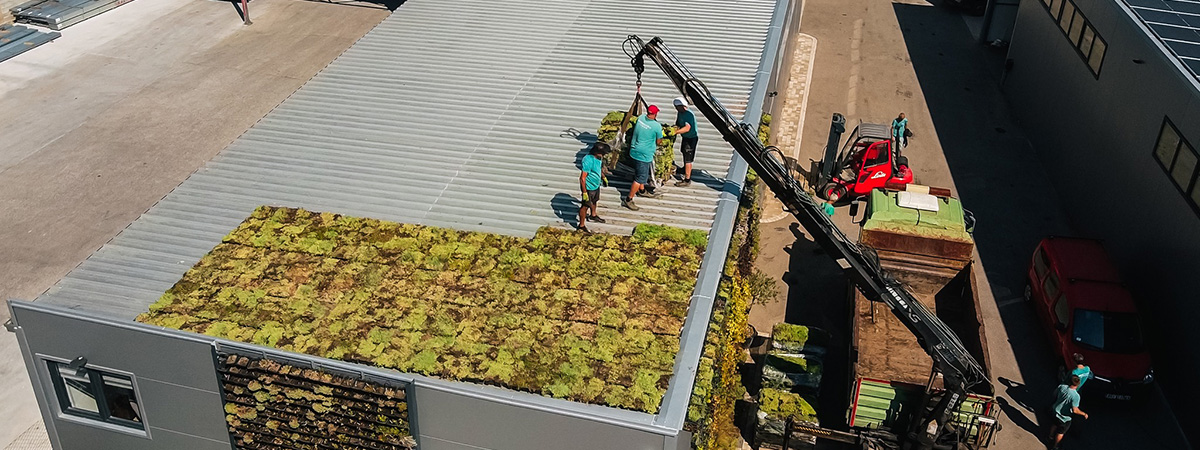
Photo:
The Western Balkans faces a growing climate crisis that threatens economic, social and environmental stability. More frequent and intense droughts, floods, wildfires and heatwaves are placing increasing pressure on vulnerable populations – particularly rural communities, women, marginalized groups and those in informal settlements – while undermining livelihoods and development gains.
Locally led adaptation solutions play a critical role in addressing climate risks through context-specific, inclusive and sustainable approaches. Yet, a significant gap remains in implementation. Local actors, including civil society organizations, MSMEs and community groups, often lack access to the financial and technical resources needed to develop and scale context-specific adaptation solutions, and regional innovation ecosystems remain underdeveloped with limited collaboration and knowledge exchange.
The Balkan Climate Adaptation Futures project (2026 - 2030) aims to address these challenges by accelerating locally led climate adaptation innovation across Bosnia and Herzegovina, Montenegro, North Macedonia and Serbia. Through an enterprise development approach, the project will support community-based solutions, strengthen regional collaboration, and promote gender equality, women’s empowerment and social inclusion. It will develop and finance innovative adaptation solutions, provide tailored business and technical support to position them for scale, and capture and share knowledge to inform replication, policy engagement and broader resilience-building across the region.
- Community
- Municipality
- District
- Regional
- Country Office
- Non-Governmental Organizations
- Private Sector Partners
- Adaptation Fund
- United Nations Development Programme (UNDP)
Expected outcomes
Outcome 1: Development, promotion, and acceleration of locally led innovative climate adaptation solutions in four Western Balkans countries, with particular emphasis on approaches that advance gender equality and women’s empowerment, and which address priority climate risks.
Outcome 2: Selected adaptation innovations are strengthened and positioned for scale through tailored business development support, market testing, and identification of funding and financing pathways.
Outcome 3: Knowledge, evidence, and lessons from adaptation innovations are captured, shared, and leveraged to inform replication, scale and policy engagement across the Western Balkans through regional learning platform and global networks.
- Image
- Image
- Image
- Image
The Western Balkans, a region rich in cultural heritage and natural resources, faces a growing climate crisis that threatens its economic, social, and environmental stability. This Regional Innovation Project focuses on four countries: Bosnia and Herzegovina, Montenegro, North Macedonia, and Serbia, all of which are already experiencing severe climate impacts. Over the past decade, floods alone have affected more than two million people in the region, while wildfires and heatwaves have caused widespread damage and thousands of premature deaths. These hazards are intensifying due to climate change, placing significant stress on already vulnerable populations.
The people of the Western Balkans region have a high population vulnerability to climate-induced risks because of the region’s socio-economic, demographic, and employment characteristics, and this is critically the case for the region’s vulnerable and marginalized communities – including rural and agricultural communities, urban poor and informal settlements, women and children, elderly and persons with disabilities, marginalized ethnic minorities and LGBTQ+ individuals.
The project’s Theory of Change
The project’s Theory of Change is grounded in the belief that locally led innovation, when supported with the right resources, partnerships, and knowledge systems, can drive inclusive, scalable, replicable, and gender-responsive adaptation across the Western Balkans. It recognizes that climate adaptation innovation emerges through interconnected dynamics rather than linear cause-and-effect relationships, creating the conditions for an innovation ecosystem to flourish.
If local innovators, actors and communities in the Western Balkans, particularly women and the most vulnerable, are empowered with interconnected innovation cycles that build capabilities, credibility, and enabling networks to develop and scale adaptation solutions;
Then an ecosystem of locally led adaptation innovations will emerge, strengthen resilience across the region, and contribute to more sustainable, inclusive and gender-responsive adaptation and responses to climate change;
Because they are supported through three mutually reinforcing components that create upward spirals of innovation, learning, and scaling.
The Theory of Change is supported by three key components:
- Innovation facility for climate adaptation: the call for proposal and innovation sprint recognize and elevate local solutions while building context-specific adaptation technologies and practices, addressing priority climate risks identified by the four countries. This generates a “capacity-confidence-investment cycle” where successful recognition of local expertise builds confidence, attracts investment, and enables further capacity building.
- Technical assistance and capability development for scale: supports the transition from pilots to scalable solutions through targeted business support, technical assistance and acceleration. This creates a “visibility-credibility-support cycle” where successful pilots enhance the local actors credibility, attract additional support from funders and policy makers, and creates opportunities for recognition.
- Knowledge management and regional collaboration: captures and amplifies learnings through peer exchange, regional platforms and systematic documentation of effective practices. This generates a “regional-local learning loop” where cross-border knowledge exchange strengthens the entire regional adaptation ecosystem.
This approach rests on several assumptions, including the willingness and capacity of local actors to drive innovation, the engagement of women-led initiatives, the existence of policy and market space to support scaling, and continued regional cooperation driven by shared climate priorities.

Outcome 1: Development, promotion, and acceleration of locally led innovative climate adaptation solutions in four Western Balkans countries, with particular emphasis on approaches that advance gender equality and women’s empowerment, and which address priority climate risks.
Output 1.1: Innovation concepts are identified and strengthened through inclusive call for interest, innovation sprints, and tailored design support.
Output 1.2: Promising pilots are financed through small-scale grants or seed funding and supported to address climate risks with a focus on gender equality and social inclusion.
Outcome 2: Selected adaptation innovations are strengthened and positioned for scale through tailored business development support, market testing, and identification of funding and financing pathways.
Output 2.1: Adaptation innovators receive tailored business development support, including incubation, acceleration, mentoring, and market testing, to strengthen implementation readiness and sustainability.
Output 2.2: Scalable adaptation innovations are connected to funding and financing opportunities and supported for integration into national systems, local service delivery, or relevant markets.
Outcome 3: Knowledge, evidence, and lessons from adaptation innovations are captured, shared, and leveraged to inform replication, scale and policy engagement across the Western Balkans through regional learning platform and global networks.
Output 3.1: Regional knowledge exchange platforms and collaboration mechanisms are established to facilitate peer learning, cross-border dialogue, and community-of-practice engagement among adaptation actors.
Output 3.2: Insights, lessons learned, and good practices from adaptation pilots are systematically documented, synthesized, and disseminated to inform future programming and policy across countries.
Led by the UNDP Istanbul Regional Hub, project-level monitoring and evaluation will be undertaken in compliance with UNDP requirements as outlined in UNDP Programme and Operations Policies and Procedures (POPP) and UNDP Evaluation Policy. Additional mandatory AF-specific M&E requirements will be undertaken in accordance with the AF Monitoring Policy and the AF Evaluation Policy and other relevant AF policies.
Key mandatory reports will include an Inception Workshop Report; annual AF Project Performance Reports, an Independent Mid-term Review (MTR) and Terminal Evaluation (TE). The Mid-term Review and Terminal Evaluation will be publicly available in English and posted on the UNDP IEO Evaluation Resource Center.
AF core indicators will be used to monitor global environmental benefits and will be updated for reporting to the AF prior to MTR and TE.
Nataly Olofinskaya, Regional Technical Advisor – Climate Change Adaptation, UNDP nataly.olofinskaya@undp.org