The Balkan Climate Adaptation Futures programme will scale cross-border innovations to build regional climate resilience.

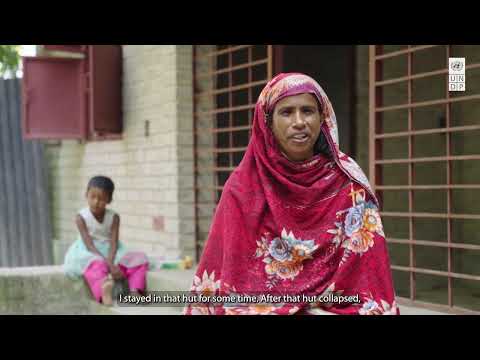
For Sajiron Nesa, every rainfall meant another sleepless night in a fragile shelter with her family. Now, a disaster-resilient home, supported by UNDP in partnership with the Government of Bangladesh and the Adaptation Fund has given her more than safety. It has restored dignity and peace of mind.
Format
The COP31 side event will take place in-person at the UNDP Pavilion, in the Blue Zone. The event will be in English with a duration of 90 minutes.
Background
Southern Africa is experiencing severe climate change impacts, with water scarcity and land degradation having profound implications for food security and resilient, sustainable development. Smallholder farmers are particularly vulnerable, facing increasing exposure to droughts, floods and erratic rainfall that threaten their livelihoods.

In Ramakanta village along the Teesta River in northern Bangladesh, a new sluice gate is draining flooded fields, enabling farmers to grow more rice.

The new equipment, including solar power systems, complements watershed action plans and enables fairer, more efficient water distribution.

The UNDP-supported projects will advance locally led adaptation, cross-border climate cooperation and climate-smart livelihoods.

From Cambodia’s 1294 early warning system to resilient housing in Viet Nam, practical solutions are helping families prepare for disasters.

New weather stations in Tajikistan are delivering earlier warnings, helping communities protect crops, livestock and livelihoods.

Regional project will support locally led solutions in Bosnia and Herzegovina, Montenegro, North Macedonia and Serbia.
