Time: 08:30–10:00
Location: MET-1, UNCCD COP17 Venue, Ulaanbaatar, Mongolia
Thematic Day: Water
Lead Organizer: Ministry of Food, Agriculture and Light Industry of Mongolia (MOFALI)
Co-organizers: UNDP and FAO
About the event
The 17th Conference of the Parties (COP17) to the UN Convention to Combat Desertification (UNCCD), held under the theme “Restoring Land, Restoring Hope,” provides a critical platform to advance practical solutions to desertification, land degradation and drought (DLDD). As part of the Water Thematic Day, this event will highlight the important connection between water security and sustainable land management, and explore how integrated approaches can strengthen resilience to climate and environmental pressures.
Addressing the interconnected challenges of climate change, biodiversity loss and land degradation requires moving beyond siloed approaches towards more integrated action. The session will showcase the global UNDP-FAO SCALA programme alongside complementary initiatives, including GEF-supported landscape restoration programmes that Mongolia is implementing or developing. It will also highlight Mongolia’s policies and plans on water and land under its Nationally Determined Contribution (NDC), National Adaptation Plan (NAP) and Land Degradation Neutrality (LDN) frameworks, positioning Mongolia as a leading country in advancing integrated approaches to the water-land nexus.
The event will present a replicable and investment-ready approach based on field-tested interventions and Mongolia’s experience working with national and international partners. These include sustainable grassland management supported by economic approaches such as carbon markets and livestock head taxes, climate-resilient forest strips, community-led water harvesting, and high-value sustainable farming. Together, these interventions demonstrate how coordinated investments at the water-land nexus can strengthen climate adaptation, improve resilience and secure local livelihoods.
Event objectives
The primary objective is to demonstrate how an integrated approach based on inclusive, multi-stakeholder partnerships can strengthen water security, enhance drought resilience and support sustainable development.
Specifically, the event will:
- Demonstrate how combining economic incentives for improved grassland management, pasture carbon markets, agroforestry forest strips, efficient water harvesting, and climate-smart berry production and farming can create a synergistic system that builds both ecological and economic resilience.
- Explore opportunities to align public policy, private finance and community action to advance Mongolia’s national climate and development goals under its NDC, NAP and LDN frameworks.
- Share lessons on ensuring that local land users, herders and entrepreneurs are key actors and beneficiaries in the governance of restoration initiatives. A two-minute video testimonial will highlight community experiences and demonstrate the value of community-led approaches to adaptation.
Expected outcomes
The event is expected to:
- Enhance understanding among policymakers and investors of how diverse land and water interventions can be bundled into a cohesive, high-impact approach.
- Generate actionable recommendations for integrating community-led water management, sustainable grazing and climate-smart agriculture into public and private investment plans.
- Strengthen commitment from partners to finance and scale integrated approaches that address the water-land nexus.
Meet Our Speakers
Moderator and Host
Dr. Radhika Dave
Senior Technical Advisor, Adaptation & Resilient Societies, UNDP — Moderator
Dr. Radhika Dave is a Senior Technical Advisor for climate adaptation at UNDP and serves as the interim joint-Head of the Adaptation and Resilience team. She is the global lead for UNDP’s work with countries on mobilizing climate finance through the Adaptation Fund and GEF’s LDCF-SCCF funds. With more than 20 years of experience, she specializes in ecosystem-based adaptation, forest and landscape restoration, sustainable land use and scaling blended finance for adaptation investments. Dr. Dave holds a Ph.D. in Geography and Environment from the University of Southampton and a master’s degree in environmental science from Yale University.
Ms. Saran Selenge
Project Coordinator, PANORAMA – Solutions for a Healthy Planet, UNDP — Host
Saran Selenge is a Project Coordinator for PANORAMA – Solutions for a Healthy Planet at UNDP. With expertise in knowledge management, climate policy and development finance, she has worked across UNDP’s regional and global teams, as well as with GIZ in Mongolia and India. Saran is an experienced trainer and facilitator with decades of experience designing learning events and facilitating knowledge exchange for sustainable development. She has also been volunteering and advising youth-led environmental and climate organizations in Mongolia since 2010.
Opening Remarks
H.E. Iderbat Tsagaankhuu
Member of Parliament of Mongolia and Minister of Food, Agriculture and Light Industry
Ms. Phemo Karen Kgomotso
Senior Technical Advisor, UNDP
Mr. Jeffrey Griffin
Executive Coordinator, GEF Team, Office of Climate Change, Biodiversity and Environment (OCB), FAO
Jeffrey Griffin has served as Executive Coordinator of the OCB-GEF team since 2014, having joined FAO in 2011. He has more than 30 years of experience supporting countries to address challenges at the intersection of environment and food systems. He began his career in Mongolia in 1993, managing one of the first GEF projects ever funded, and subsequently spent more than 14 years working with UNDP as a senior independent expert supporting and evaluating GEF projects worldwide. At FAO, he has overseen significant growth of the organization's GEF portfolio.
Presenters
Mr. Jambaltseren Tumur-Uya
State Secretary, Ministry of Food, Agriculture and Light Industry
Ms. Saruul Dolgorsuren
SCALA, UNDP
Saruul Dolgorsuren is a climate policy and sustainable development practitioner with extensive experience translating climate ambition into implementation. As National Project Coordinator at UNDP Mongolia, she works closely with government institutions, development partners, academia, civil society and local organizations to strengthen climate governance, mobilize climate finance and advance resilient, low-carbon development. She has led multidisciplinary teams and managed complex, donor-funded climate portfolios, including serving as the Focal Point for the Green Climate Fund, and has played a key role in supporting Mongolia’s NDCs, Long-Term Low Emission Development Strategy, climate finance planning and integration of climate action into national development priorities.
Panelists
Mr. Chimedtseren Nadmid
Herder, Khashaat Soum, Arkhangai Province
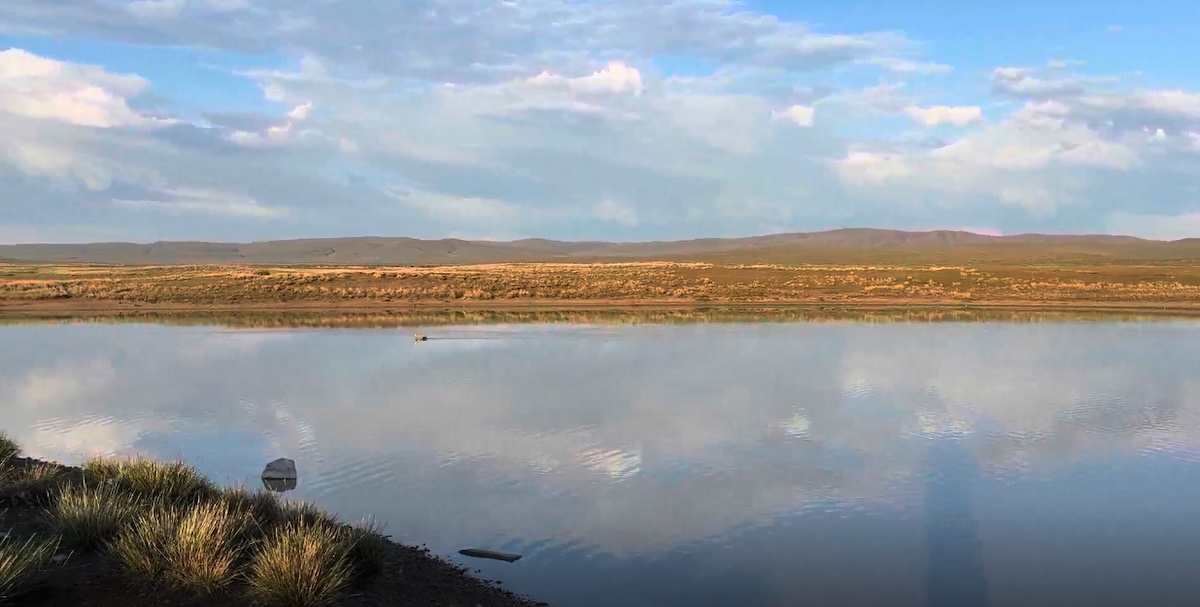
Mr. Chimedtseren Nadmid is a herder and volunteer environmental conservationist from Khashaat Soum, Arkhangai Province. With more than four decades of experience living and working on Mongolia’s rangelands, he has dedicated himself to sustainable livestock herding and biodiversity conservation. Since 2005, he has supported the conservation of argali, or wild sheep, working with researchers and local communities to help establish and protect wildlife populations. He also initiated the development of a community-based pond that has improved water access for livestock and wildlife, benefiting more than 30,000 livestock and providing habitat for waterbirds and other species.
Dr. Batmunkh Damdindorj
Research Advisor on Water, Mongolian Water Association
Dr. Batmunkh Damdindorj is a water resources specialist and former Director-General of Livestock Policy Implementation and Coordination at Mongolia’s Ministry of Food, Agriculture and Light Industry, where he held various leadership positions for more than 25 years. He specializes in groundwater modelling, water balance assessment and water harvesting techniques. Since 1998, he has worked on water drilling and borehole projects providing safe groundwater supplies for livestock. He was also a key leader in Mongolia’s advocacy for the UN-designated International Year of Rangelands and Pastoralists 2026 and supported FAO in developing Mongolia’s National Action Plan in 2025.
Mr. Batbayar Zeneemyadar
Head of the Water Agency of Mongolia
Batbayar Zeneemyadar is the Head of the Water Agency of Mongolia, the government implementing agency responsible for advancing national water management and policy. He brings extensive experience in public administration, international relations and the water sector, having previously served as Deputy Director of the Water Authority and as Ambassador of Mongolia to Hungary from 2016 to 2022. He is also an Associate Professor at Shihihutug University and holds a Doctorate in Law and a Master’s degree in State Law from Eötvös Loránd University.
Ms. Maude Veyret-Picot
Technical Officer, Office of Climate Change, Biodiversity and Environment, GEF Unit, FAO
Ms. Veyret-Picot is a climate and environment specialist with more than 20 years of experience, including more than a decade working on Global Environment Facility programming and partnerships. She leads the strategic development, coordination and delivery of FAO’s GEF portfolio in Africa and the Near East, advancing sustainable agrifood systems through integrated climate, biodiversity and land management initiatives. She also serves as Social Inclusion Focal Point for the FAO-GEF Coordination Unit, promoting inclusive, rights-based and people-centred approaches.
Ms. Diana Salvemini
Senior Technical Advisor, Local Action, UNDP
Diana Salvemini is a Senior Global Technical Advisor on Local Action at UNDP, leading global efforts to advance environmental finance and locally led action. She provides technical assistance, strategic advice and resource mobilization support to local action programming funded by the GEF, GCF, Adaptation Fund and bilateral sources. With more than 15 years of experience at UNDP, Diana works to empower communities to deliver nature-based solutions, strengthen resilience and promote sustainable livelihoods, while connecting local action with global environmental priorities.