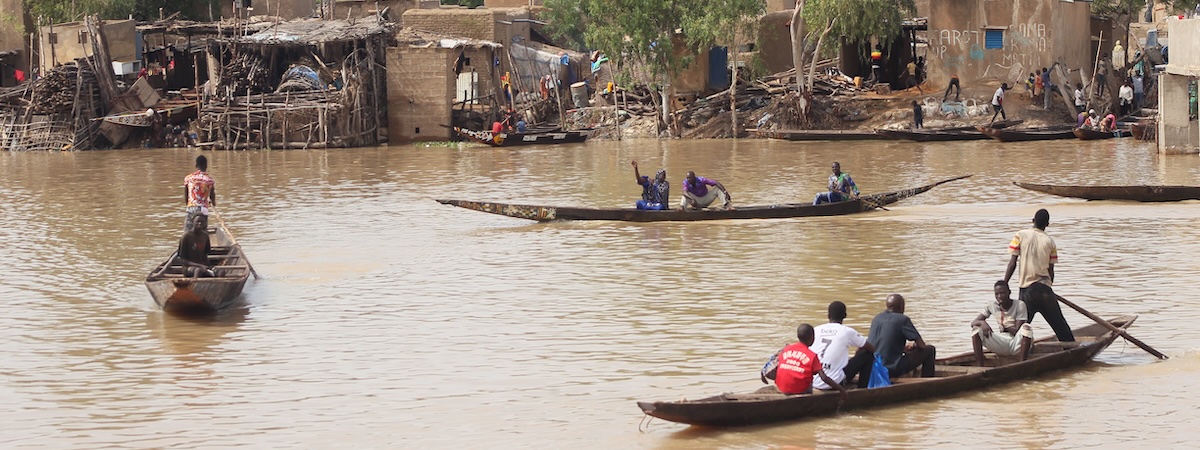
Photo:
Mali is facing increasing climate variability, with rising temperatures, erratic rainfall, and more frequent extreme events such as droughts, floods, and strong winds intensifying risks across key sectors. While the country has made progress through its initial National Adaptation Plan (NAP) and Nationally Determined Contribution (NDC), important gaps remain in data, coordination, and long-term planning. This project aims to strengthen Mali’s adaptation planning framework by deepening risk and vulnerability assessments, enhancing institutional coordination, and addressing critical cross-cutting issues such as gender, social inclusion, and climate-related conflict. By building the evidence base and supporting the revision of the NAP, the project will help translate existing commitments into a more comprehensive, inclusive, and actionable pathway toward climate-resilient development.
The project was approved in April 2025.
- National
- National Governments
- United Nations Development Programme (UNDP)
Mali’s adaptation efforts are currently constrained by fragmented planning, limited sectoral coverage, and gaps in long-term vision. This project will support the development of more comprehensive and integrated adaptation plans across key sectors, including agriculture, forestry, water and sanitation, energy, transport infrastructure, and health. It will also facilitate the validation and revision of the initial NAP, ensuring that adaptation priorities are better aligned across national and subnational levels. By strengthening coordination mechanisms and institutional frameworks, the project will help ensure that adaptation actions are more coherent, better integrated into development planning, and responsive to evolving climate risks.
A central component of the project is strengthening the evidence base for adaptation decision-making. This includes generating downscaled climate scenarios and conducting detailed vulnerability and risk assessments across sectors and regions, including areas affected by conflict that have previously been under-assessed. Improved data and analysis will support more rigorous prioritization of adaptation options and enable more targeted interventions. The project will also enhance monitoring and reporting systems, ensuring that progress on adaptation can be tracked effectively and aligned with national reporting commitments.
The project places strong emphasis on addressing cross-cutting issues that are critical to Mali’s context. It will integrate considerations of gender equality, social inclusion, human mobility, and climate-related security risks into adaptation planning processes. By doing so, it aims to ensure that adaptation strategies are inclusive and responsive to the needs of vulnerable populations, including women, youth, and communities affected by displacement and conflict. Engagement with local stakeholders, civil society, and professional groups will be prioritized to strengthen ownership and ensure that adaptation actions are grounded in local realities.
Finally, the project will support Mali in mobilizing the financial resources needed to implement its adaptation priorities. It will introduce more structured approaches to assess and prioritize adaptation investments, explore diverse sources of climate finance, and support the development of concept notes to access funding. By strengthening the link between planning and financing, and building on ongoing efforts by partners such as UNDP, GIZ, and the World Bank, the project will help position Mali to scale up adaptation action and advance a more resilient and sustainable development pathway.
Outcome 3.1: Adaptation planning governance and institutional coordination strengthened
Outcome 3.2: Evidence produced to design adaptation solutions for maximum impact
Outcome 3.4: Adaptation finance increased