

UNCCD COP17, Ulaanbaatar - Discussions at the 17th Conference of the Parties to the United Nations Convention to Combat Desertification (UNCCD) focused on turning practical solutions into investments when it comes to water, land, agriculture and local communities.
Scaling up solutions was a key message at the SCALA programme’s COP17 side event on 25 August, “Scaling Integrated Water and Land Resilience Solutions in Mongolia: From Scarcity to Security,” organized by the Ministry of Food, Agriculture and Light Industry of Mongolia (MOFALI), with UNDP and FAO.
Held during Water Thematic Day, the event brought together over 55 government representatives, development partners, technical experts and local land users to look at how Mongolia can strengthen resilience to drought, land degradation and climate change through integrated, investment-ready solutions.
For Mongolia – which is spearheading advocacy efforts on the International Year of Rangelands and Pastoralists with FAO as lead coordinating agency – this challenge is increasingly urgent. Climate change, desertification, land degradation and water scarcity are placing pressure on herders, livestock and ecosystems, making water security inseparable from the health of the country’s rangelands and agricultural systems.
Integrating policy across sectors
Opening the event, H.E. Mr. Iderbat Tsagaankhuu, Member of Parliament of Mongolia and Minister of Food, Agriculture and Light Industry, emphasized that Mongolia needs to approach these challenges together rather than separately.
“Water harvesting and surface water management are key climate adaptation priorities,” he said, pointing to the role of nature-based solutions such as water ponds, forest strips and sustainable rangeland management. He also highlighted the contribution of the SCALA programme in developing investment-ready adaptation solutions and strengthening alignment across Mongolia’s national policies.
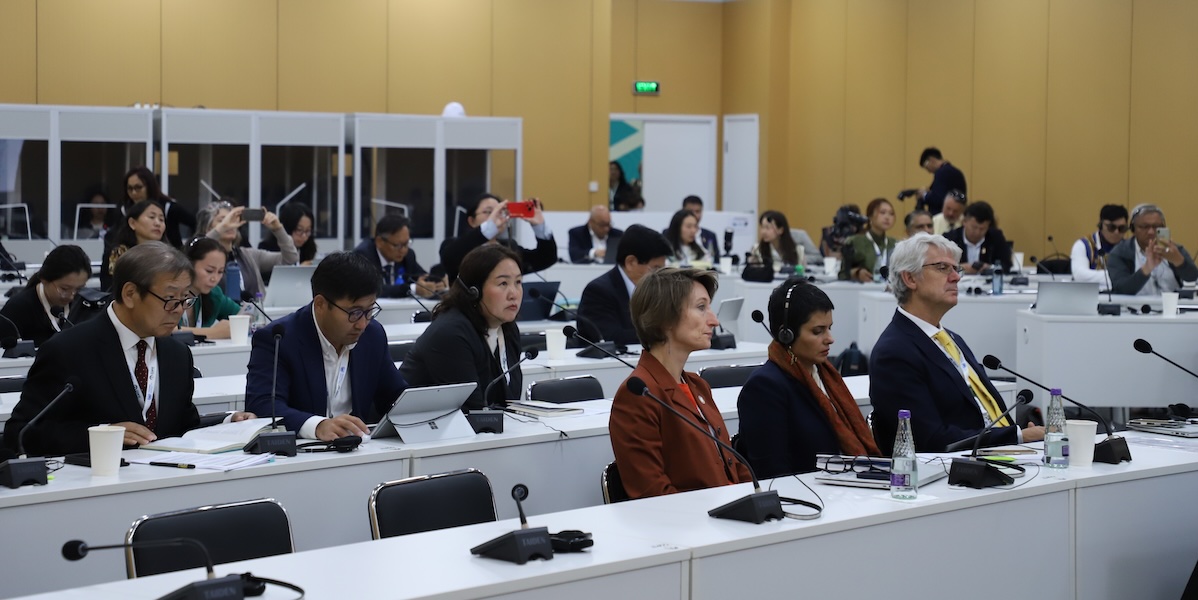
Mongolia has strengthened its climate and environmental ambition through its Nationally Determined Contribution (NDC3.0), National Adaptation Plan (NAP) and National Biodiversity Strategy and Action Plan (NBSAP), creating an opportunity to connect climate adaptation and mitigation with biodiversity conservation, land restoration and sustainable agriculture.
Mr. Jambaltseren Tumur-Uya, State Secretary, MoFALI, outlined how this ambition is being translated into sectoral action. Agriculture, and particularly livestock production, is central to Mongolia’s climate agenda, with NDC3.0 setting a target to reduce greenhouse gas emissions from agriculture by 30.3 percent by 2035.
“The integration of water management, pasture restoration, biodiversity conservation and rural livelihoods is critical,” he said, highlighting how these areas can reinforce one another rather than being addressed through separate investments.
From analysis to investment-ready solutions
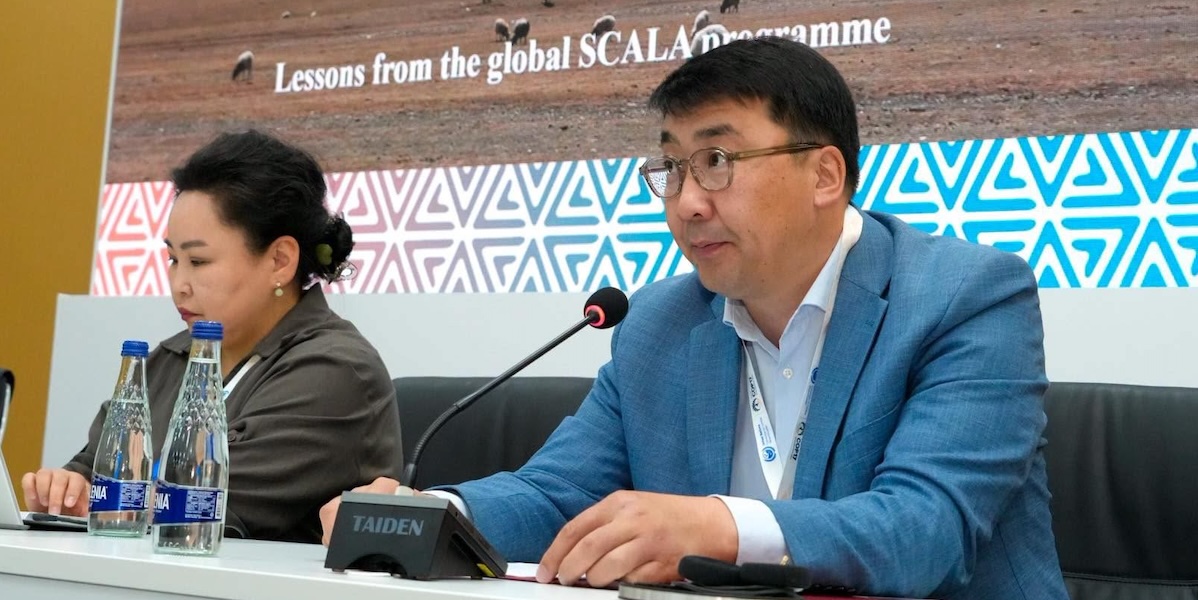
Through SCALA, Mongolia has been working to make that integrated approach more practical. The programme, implemented jointly by UNDP and FAO, has supported the country to identify where climate solutions can have the greatest impact and what is needed to move them from analysis into implementation. Ms. Saruul Dolgorsuren, SCALA National Project Coordinator, UNDP, described this work as a process of understanding “what works, where it works and under which conditions it can be scaled up.”
SCALA’s system-level assessments have examined opportunities including water harvesting for livestock and arable farming, sustainable rangeland management, pasture carbon markets, forest strips around agricultural land and climate-resilient value chains. The assessments are intended to provide a stronger evidence base for investment, while working with MoFALI, the Ministry of Finance, the Ministry of Environment and Climate Change, and local governments have also helped strengthen institutional capacity.
Evidence in action
Two examples illustrate the approach. A SCALA assessment of water harvesting found that relatively small-scale, affordable and community-driven solutions can generate benefits beyond simply providing water for livestock. Work on pasture carbon markets, meanwhile, is exploring how emerging climate finance mechanisms can create incentives for better rangeland management — particularly timely as Mongolia develops its carbon market framework.
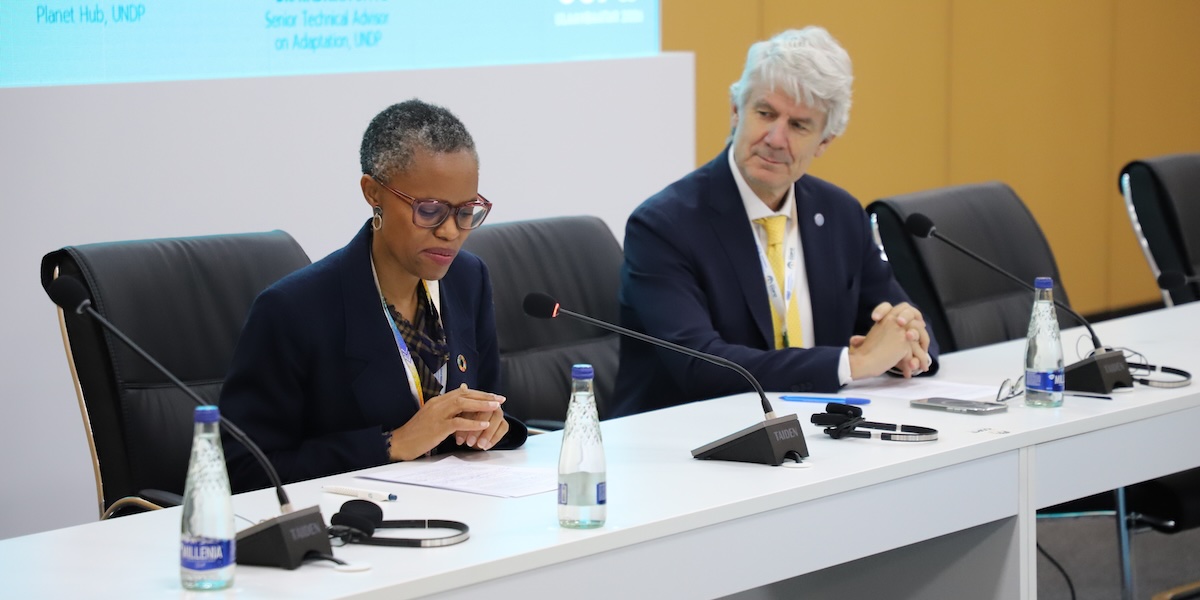
For Dr. Phemo Karen Kgomotso, Senior Technical Advisor, UNDP, the next step is to connect these solutions with the finance and institutional systems that can enable them to grow.
“At the heart of this are Mongolian communities, not only as beneficiaries but as active stewards of change,” she said, stressing the importance of policy coherence and of directing finance towards solutions that restore land, protect biodiversity and strengthen climate resilience.
Voices from the Rangelands
The importance of that locally led change came through most clearly in the experience shared by Mr. Chimedtseren Nadmid, a herder and volunteer environmental conservationist from Khashaat Soum, Arkhangai Province.
Around eight years ago, roughly 30 households came together to construct a community water pond. Before it was built, herders sometimes had to move their animals to water sources in neighboring provinces, creating tensions over access to scarce resources. The pond now provides water for livestock as well as wildlife, including waterbirds.
“Now, both animals and humans are happy,” he said, while emphasizing that the involvement of herders was essential to making the initiative work. He also called for continued support from local governments so that communities can build and replicate such efforts across other provinces.
For Dr. Batmunkh Damdindorj, Research Advisor on Water, Mongolian Water Association, this kind of practical experience builds on decades of work in Mongolia. He noted that UN-supported water pond technologies have been developed in the country since 2003, while stressing that solutions need to reflect the very different climatic conditions across Mongolia.
Turning evidence into finance
The case for integration was echoed by FAO. Mr. Jeffrey Griffin, Executive Coordinator, Global Environment Facility (GEF) Team, Office of Climate Change, Biodiversity and Environment, FAO, said the experience being developed through SCALA reflects a wider lesson for climate and environmental investment: successful implementation depends on bringing the right actors and systems together.
“Shifting from scarcity to security needs more than funding,” he said. “It requires partnership, coordination, shared vision, and sustained commitment.”
For investors and policymakers, that also means demonstrating that resilience investments can deliver lasting value. Mr. Griffin pointed to ownership by stakeholders, integrated governance, bankability, and evidence as important ingredients for successful implementation.
SCALA is helping build that evidence and pipelines. By translating climate priorities in agriculture and land use into concrete investment opportunities, the programme is helping create a bridge between national plans and action on the ground.
Ms. Maude Veyret-Picot, Regional Lead for Africa and the Near East for FAO’s GEF Unit, highlighted the role of catalytic finance in making that bridge possible. Through GEF-9, integrated programmes on drylands and drought management, as well as food systems, are designed around the understanding that productive and resilient landscapes depend on healthy soils and reliable water.
The objective, she noted, is not simply to finance individual projects, but to develop stronger investment pipelines and public-private partnerships capable of addressing interconnected challenges at landscape scale.
That landscape perspective also shaped the contribution from Ms. Diana Salvemini, Senior Technical Advisor, Local Action, UNDP, who stressed that restoration is most effective when the people who depend on landscapes are involved in managing them. “Local actors are the vanguards and agents of change,” she said, emphasizing that communities need access to finance and decision-making power if locally led solutions are to deliver lasting results.
The discussion at COP17 returned repeatedly to a question that is bigger than any individual water pond, pasture or policy: how can countries take solutions that are already demonstrating value and create the conditions for them to spread?
For Mongolia, the foundations are increasingly in place. National climate and biodiversity frameworks have become more aligned. SCALA has generated evidence on practical adaptation options and supported institutions to translate that evidence into investment concepts. Communities are demonstrating what locally led action can achieve, while government agencies and development partners are building the systems needed to connect local experience within the national priorities.
The challenge now is how to scale more.
Mongolia’s experience through the SCALA programme points the way: start with the realities faced by communities, build the evidence for what works, connect it to national policy, and then bring partners and finance behind these solutions.